



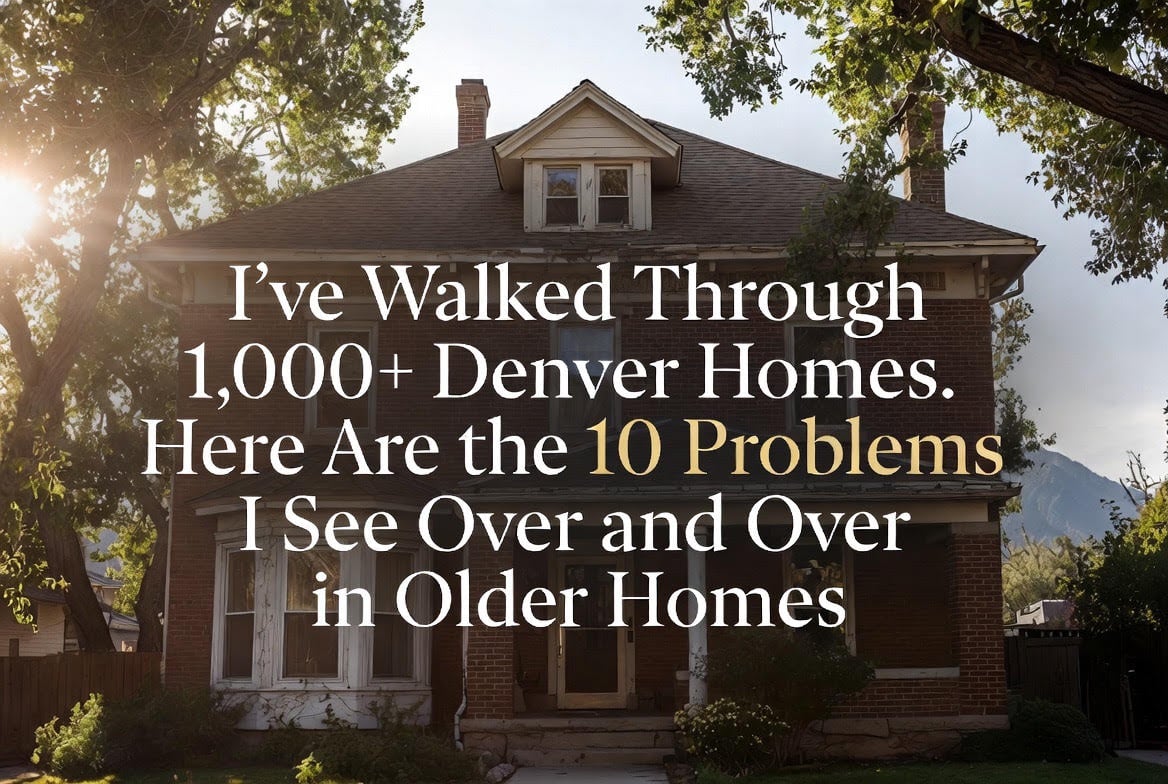
If you've ever fallen in love with a beautiful Denver bungalow, Tudor, Denver Square, or Victorian, you're not alone. Some of the city's most desirable neighborhoods are filled with homes that have incredible architecture, mature trees, and character you simply cannot build today.
I've also walked through well over 1,000 homes across Denver's historic neighborhoods. Whether representing buyers, helping sellers prepare for market, or touring homes before renovations, I've seen firsthand what separates a charming old home from an expensive surprise.
The good news is that most of these issues are manageable when you know what to look for. The key is understanding which problems are common, which ones are deal breakers, and which ones create opportunities to build equity.
Here are the ten issues I encounter over and over again in Denver's older homes.
1. Aging Sewer Lines
This is probably the biggest hidden expense I encounter.
Many Denver homes built before the 1960s still have original clay sewer lines. Over decades, tree roots work their way into joints, causing blockages, cracks, and eventually complete failures.
A sewer replacement can easily cost $8,000 to $20,000 depending on lot size and accessibility.
Whenever I'm helping buyers purchase an older Denver home, I strongly recommend a sewer scope. It is one of the least expensive inspections and one of the most valuable.
2. Outdated Electrical Systems
Beautiful original trim and hardwood floors are wonderful.
Knob-and-tube wiring is not.
Many historic homes have received partial electrical upgrades over the years, creating a patchwork of old and new wiring that can be confusing and sometimes unsafe.
Common issues include:
- Insufficient electrical service
- Ungrounded outlets
- Aluminum branch wiring in certain eras
- Overloaded panels
- DIY electrical work completed without permits
Electrical upgrades can also affect homeowners insurance, making this something buyers should understand before closing.
3. Foundation Movement
Denver's expansive clay soils create unique challenges.
Nearly every older home develops some level of settling. Hairline cracks may be perfectly normal, while stair-step cracking, significant sloping floors, or sticking windows could indicate larger structural movement.
Not every crack means foundation failure, but every foundation deserves a careful evaluation.
4. Deferred Maintenance
Many homeowners focus on cosmetic updates while postponing the less exciting maintenance items.
I often see:
- Roofs nearing the end of their lifespan
- Aging furnaces
- Old water heaters
- Damaged gutters
- Worn exterior paint
- Rotten trim
None of these items individually are necessarily alarming, but together they can represent a significant investment for a new owner.
5. Poorly Planned Renovations
Denver has experienced several renovation booms over the past few decades.
Some remodels are beautifully executed.
Others create problems that buyers inherit.
I've seen load-bearing walls removed without proper engineering, flipped homes with cosmetic improvements hiding underlying issues, improperly installed windows, and additions that never matched the original structure.
A renovation should improve both function and longevity, not simply appearance.
6. Moisture in Basements
Many Denver homes were built long before modern waterproofing systems existed.
Basements often experience seasonal moisture, particularly during heavy spring rains.
Watch for:
- Freshly painted basement walls
- Musty odors
- Efflorescence on concrete
- Warped flooring
- Previous water mitigation systems
A dry basement is always worth investigating rather than simply assuming.
7. Windows That Need Attention
Original wood windows are one of the defining architectural features of Denver's historic homes.
Many simply need restoration rather than replacement.
However, others have deteriorated beyond repair or have been replaced with poorly fitted modern windows that compromise both efficiency and curb appeal.
Understanding preservation options can save homeowners thousands while maintaining historic character.
8. HVAC Systems That Struggle
Many older homes were never designed for today's heating and cooling expectations.
Common issues include:
- Limited ductwork
- Uneven temperatures
- No central air conditioning
- Undersized systems after additions
- Poor insulation
Fortunately, modern HVAC solutions have become much more effective without sacrificing architectural integrity.
9. Drainage Problems Around the Property
Water should always move away from a home's foundation.
Unfortunately, many older homes have settled landscaping, improper grading, or clogged drainage systems that direct water toward the house instead.
Simple improvements like extending downspouts or correcting grading can prevent expensive structural repairs later.
10. Owners Who Assume Every Old Home Is a Money Pit
Ironically, this is the biggest misconception I encounter.
Yes, older homes require maintenance.
But many have already had the expensive improvements completed, including:
- New sewer lines
- Updated electrical
- New roofs
- Foundation stabilization
- Modern plumbing
- Energy-efficient HVAC systems
Some of the best-maintained homes in Denver are over 100 years old.
Age alone should never discourage buyers.
Why These Problems Shouldn't Scare Buyers
Older homes have something that new construction often struggles to replicate.
They have craftsmanship.
Original hardwood floors, mature landscaping, solid masonry, historic architecture, larger lots, and established neighborhoods continue to attract buyers across Denver.
The goal isn't finding the perfect old home.
It's understanding the home's story before making an offer.
When buyers understand potential repairs, they can negotiate intelligently, budget appropriately, and often purchase incredible properties with confidence.
Sellers Benefit From Understanding These Issues Too
If you're preparing to sell an older home, identifying these concerns before listing can dramatically improve your sale.
Pre-listing inspections, sewer scopes, HVAC servicing, and small repairs often eliminate surprises during negotiations.
Homes that are well prepared typically generate stronger buyer confidence and smoother transactions.
Why Experience Matters When Buying Historic Denver Homes
After walking through more than 1,000 homes across Denver's historic neighborhoods, I've learned that every house tells a story.
Some stories involve deferred maintenance.
Others reveal thoughtful renovations that dramatically increase value.
Knowing the difference can save buyers thousands of dollars while helping sellers position their homes for maximum value.
As a Denver Realtor and Park Hill resident, I spend a significant amount of time evaluating older homes throughout Park Hill, Congress Park, Wash Park, Crestmoor, Hilltop, Berkeley, Sloan's Lake, Highlands, Bonnie Brae, and many of Denver's most established neighborhoods.
Whether you're buying your first historic home or preparing to sell one, I also maintain a trusted network of structural engineers, sewer specialists, electricians, roofers, plumbers, HVAC contractors, and preservation experts. If you need a recommendation, I'd be happy to connect you with professionals I've come to trust over the years.
At the FORM Team at Compass Denver, our goal is to help clients make informed decisions with confidence.
David Krohne's slogan says it best: Your Key to Park Hill's Finest Properties.
Frequently Asked Questions
Should I avoid buying an older home in Denver?
Not at all. Many of Denver's best neighborhoods consist almost entirely of older homes. The key is understanding the condition of the property through thorough inspections.
What inspection is most important for older Denver homes?
A sewer scope is one of the highest-value inspections you can perform. It identifies underground issues that a standard home inspection typically cannot.
Are foundation cracks always serious?
No. Minor settling is common in Denver. Larger cracks, sloping floors, or sticking doors and windows should be evaluated by a structural professional.
Is it better to renovate or buy an already-updated home?
It depends on your budget, timeline, and goals. Some buyers prefer turnkey homes, while others see renovation as an opportunity to build equity.
Which Denver neighborhoods have the most historic homes?
Park Hill, Congress Park, Washington Park, Berkeley, Highlands, Sloan's Lake, Hilltop, Bonnie Brae, and portions of Capitol Hill all feature a large inventory of older homes with distinctive architectural styles.
Can an experienced Realtor help identify these issues before I buy?
Absolutely. While inspectors provide detailed evaluations, an experienced Realtor who regularly works with older homes can often recognize common concerns early in the process and recommend appropriate specialists.
Check out this article next