

Summary
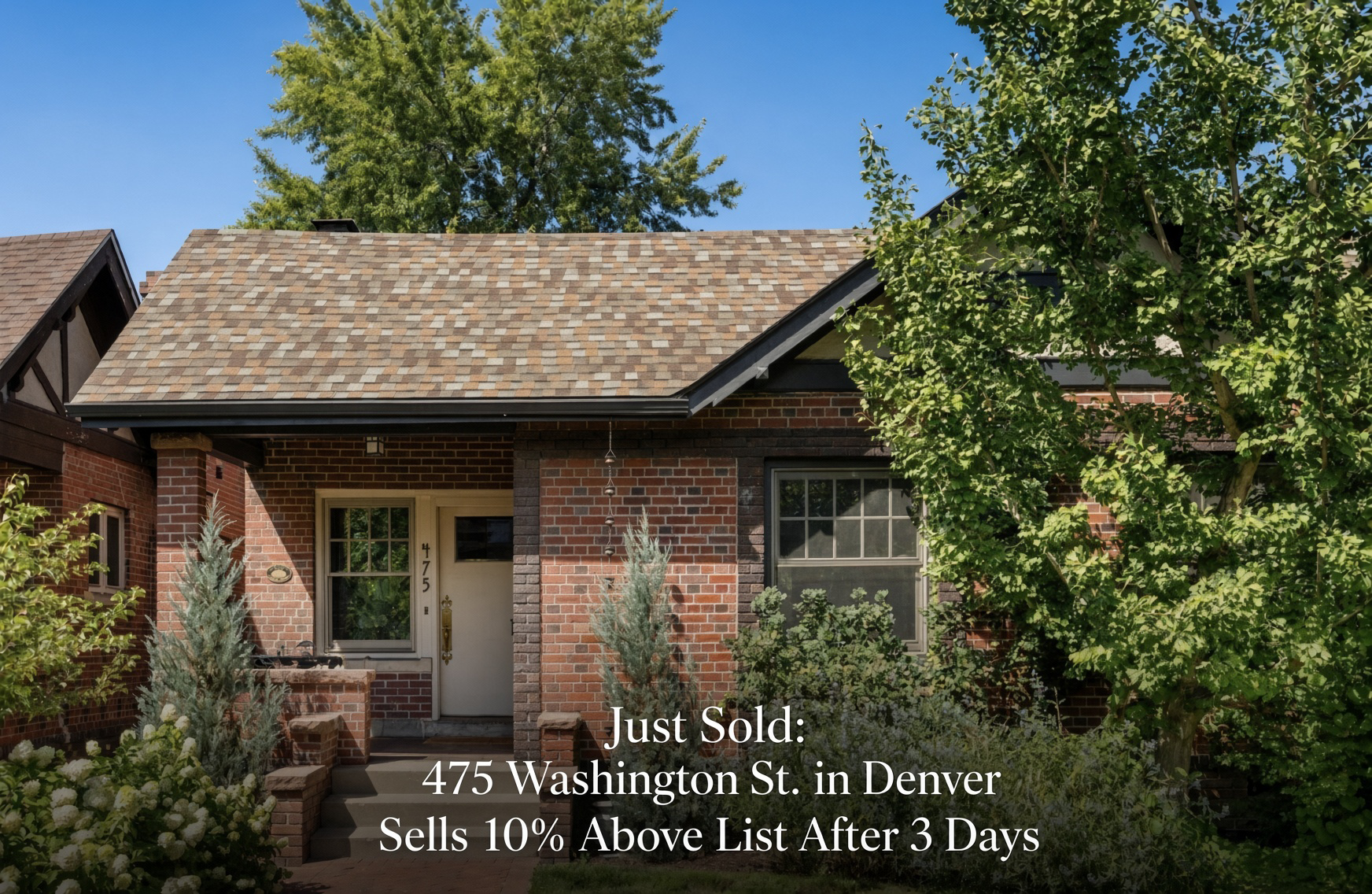
475 Washington St. in Denver sold 10% above its list price after just three days on the market, demonstrating how distinctive older homes can attract strong competition when character, condition, design, and pricing align. The 1916 Alamo Placita Craftsman combined preserved architecture with thoughtful updates, giving buyers a compelling alternative to generic renovated homes.
475 Washington St. was not the kind of property that needed to compete by being the newest house on the market. Its appeal came from something harder to replicate: original architectural character that had been carefully preserved while the less visible parts of the home had been brought forward to meet modern expectations.
That distinction matters in Denver, where older neighborhoods contain a wide range of housing conditions. A 1910s or 1920s home can have beautiful woodwork, mature landscaping, and architectural details that would be prohibitively difficult to reproduce today, but those advantages do not automatically translate into buyer demand. Condition, layout, systems, design, and pricing still determine whether buyers see the home as an opportunity or a project.
475 Washington St. found the right balance. It spent only three days on the market and ultimately sold for 10% above its list price.
Why 475 Washington St. Stood Out to Denver Buyers
The strongest feature of 475 Washington St. was not any single room. It was the combination of original character and modern livability.
Built in 1916, the Craftsman half-duplex retained the details that give Denver's older homes their identity. Original woodwork, built-ins, wood floors, wainscoting, and a wood-burning fireplace created architectural continuity throughout the house. Even the approach to the property reinforced that character, with a brick path, mature landscaping, and a traditional front porch.
But historic character alone does not make an older home easy to sell.
The kitchen and bathroom had been renovated with a design vocabulary that complemented rather than erased the home's architecture. White cabinetry, black granite counters, a dramatic tile backsplash, floating shelves, carefully selected wallpaper, lighting, and tile created a home that felt curated rather than generically updated.
That distinction is increasingly important when evaluating renovated older homes.
A renovation can technically make a house newer without making it more desirable. Replacing everything with interchangeable finishes may eliminate maintenance concerns, but it can also remove the architectural qualities that made the house interesting in the first place.
At 475 Washington, the renovation strategy was different. The goal was not to make a 1916 house look like a 2026 house. It was to make a 1916 house work better for a modern buyer while preserving what could not easily be recreated.
Why Three Days and 10% Over List Matter
Selling 10% above list price after three days is not simply a story about pricing a home aggressively. It illustrates what can happen when the perceived value of a property exceeds the price buyers initially see.
The important distinction is between price and value.
Price is the number attached to the listing. Value is the buyer's assessment of what they are getting in return for that price. When a property offers a combination that buyers find difficult to reproduce elsewhere, multiple buyers may independently reach the conclusion that the home is worth more than the asking price.
The three-day market time is important because it indicates that the response happened quickly. Buyers did not need weeks of exposure to discover the property's strengths. The combination of location, architecture, condition, presentation, and pricing generated enough interest early in the listing period to produce a result 10% above list.
That creates a useful lesson for Denver sellers: the objective of pricing is not always to identify the highest number a seller would like to receive. It is to establish a price and presentation that cause the right buyers to act.
For a distinctive home, that can be particularly important.
Older Denver Homes Require a Different Approach to Value
Having renovated older Denver homes, I have learned that the most important question is often not whether a house needs work, but which work actually matters.
There is a meaningful difference between cosmetic updating and fundamental property risk.
At 475 Washington, several of the major ownership concerns had already been addressed, including updated electrical and plumbing, newer windows, new HVAC, and a newer garage. That matters because buyers evaluating an older home are not simply calculating how attractive the finishes are. They are also trying to estimate what ownership might look like after closing.
A useful way to evaluate an older Denver home is to separate the property into three categories:
| Category | What buyers should consider |
|---|---|
| Character | What original architectural elements are difficult or impossible to recreate? |
| Function | What has been improved to make the home work for contemporary life? |
| Risk | Which major systems or components could create significant future expense? |
The strongest older homes often perform well when all three categories are addressed.
475 Washington offered preserved architectural character, functional improvements including a remodeled kitchen and renovated bath, and updates to several important systems. That combination reduced the gap between the emotional appeal of an older home and the practical concerns that can make buyers hesitate.
The Value of Renovation Is Not Just About How Much You Spend
One of the biggest mistakes homeowners can make before selling an older Denver property is assuming that every renovation dollar produces the same return.
It does not.
A renovation can improve a property's value by solving a functional problem, reducing perceived risk, improving design, or making the home more competitive with alternatives. The strongest projects often accomplish more than one of those things simultaneously.
The primary bedroom at 475 Washington is a good example. Dual closets and direct access to the bathroom provided a level of functionality that buyers may not expect from a home of this era. The tall-ceiling basement also created flexibility for a future guest suite, office, media room, or combination of uses.
The lesson is broader than this particular house: renovation value comes from improving the things buyers actually have to live with, not simply from making a property look newer.
That is particularly relevant in Denver's older neighborhoods, where removing original character in pursuit of a generic renovation can make a property less distinctive at exactly the moment it needs to stand apart.
Alamo Placita Shows Why Neighborhood Context Matters
475 Washington is located in Alamo Placita, where neighborhood character and proximity to urban amenities are part of the property's appeal.
For buyers considering older Denver homes, neighborhood selection and house selection cannot be separated completely. The same architectural style can perform differently depending on the surrounding housing stock, streetscape, access to parks and amenities, lot characteristics, and the expectations of buyers shopping in that micro-market.
This is one reason I encourage buyers to evaluate an older Denver home on two levels.
First, ask whether the house itself works.
Second, ask whether the house makes sense within its neighborhood.
A beautifully renovated 1916 home may have a very different competitive position from a similarly renovated home several neighborhoods away. Buyers are comparing not just square footage and finishes, but also the experience of living on that particular block and in that particular part of Denver.
That context is especially important with character properties because part of what buyers are purchasing is something that cannot be added later through construction: the surrounding neighborhood's identity.
What Sellers Can Learn From the 475 Washington Sale
The result at 475 Washington suggests a useful three-part framework for sellers of older Denver homes: preserve what is difficult to replace, improve what buyers experience every day, and price according to the competition buyers actually have.
Preserving character means recognizing that original woodwork, built-ins, fireplaces, wainscoting, windows, and architectural proportions can be major differentiators.
Improving function means addressing the parts of the house that can make buyers hesitate, whether that is an outdated kitchen, an awkward bathroom, aging systems, or poor use of available space.
Pricing means understanding that the listing price is part of the marketing strategy, not simply a declaration of what the seller hopes to receive.
475 Washington illustrates what can happen when those elements reinforce one another. A 1916 house with preserved craftsmanship, thoughtful design, meaningful system updates, and strong presentation generated enough buyer interest to sell 10% above its list price in three days.
That does not mean every Denver home should be priced below market or every older home will generate multiple offers. It does mean sellers should think carefully about the relationship between the property's distinctive qualities, its condition, its competing inventory, and the price at which buyers are most likely to engage.
What Buyers Should Take From This Sale
For buyers, the lesson is almost the opposite.
A home that feels compelling on the first showing can attract competition quickly, particularly when it offers something difficult to reproduce. Waiting for an obviously underpriced property is not always a reliable strategy when the real value lies in a combination of architecture, renovation quality, location, and condition.
When evaluating an older Denver home, I would prioritize three questions:
- What would be difficult or expensive to recreate? Look for architectural character, mature landscaping, lot qualities, and neighborhood context.
- What has already been solved? Look beyond finishes to electrical, plumbing, HVAC, windows, roofing, and other major components.
- What would you change if you owned it? Distinguish between improvements that genuinely affect how you live and changes driven primarily by personal taste.
That framework can help buyers avoid both extremes: dismissing an older home because it is not perfect, or overpaying simply because it looks beautiful.
The goal is to understand what is actually scarce, what is already improved, and what remains for you to solve.
Key Takeaways
- 475 Washington St. sold 10% above list price after three days on the market, showing how quickly a distinctive Denver home can generate buyer competition when price and presentation align.
- Historic character was a central differentiator. The 1916 Craftsman retained original woodwork, built-ins, wainscoting, wood floors, and a wood-burning fireplace.
- The renovation complemented the architecture rather than replacing it. The remodeled kitchen, renovated bath, wallpaper, lighting, tile, and other finishes brought contemporary design into the older home.
- System updates reduced a major source of older-home buyer uncertainty. Electrical, plumbing, windows, HVAC, and the garage had all received meaningful updates.
- For older Denver homes, value is more than cosmetic condition. Buyers should evaluate character, everyday function, and ownership risk separately before determining what a property is worth.
- Pricing is part of the strategy. The goal is not simply to publish the highest possible asking price, but to position a property so that the right buyers recognize its value and have a reason to act.
FAQ
How much above list price did 475 Washington St. sell for?
475 Washington St. sold for 10% above its list price after just three days on the market. The result reflects the combination of the property's character, renovation quality, condition, location, presentation, and pricing strategy.
How quickly did 475 Washington St. sell?
The home was on the market for three days before going under contract. That short market time indicates that buyer interest developed early rather than requiring an extended marketing period.
What made 475 Washington St. different from a typical renovated Denver home?
The property combined original 1916 Craftsman character with thoughtful modern improvements. Original woodwork, built-ins, wainscoting, wood floors, and a fireplace were preserved while the kitchen, bathroom, systems, and other elements were updated.
Is renovating an older Denver home always a good investment?
No. Renovation value depends on what is being improved, the neighborhood, competing properties, and the property's eventual position in the local market. Improvements that solve functional problems or reduce major ownership concerns generally have a different value proposition from purely cosmetic changes.
What should buyers look for when purchasing an older Denver home?
Buyers should separate architectural character, functional condition, and ownership risk. A home may have beautiful original details but require substantial infrastructure work, or it may have excellent systems but have lost much of its architectural identity through renovation.
Should Denver sellers price an older home below its expected value?
There is no universal pricing formula. The appropriate strategy depends on the property's competition, condition, buyer pool, and distinctive qualities. The 475 Washington result shows that pricing can be used to generate early buyer engagement, but it should be considered within the context of the entire property and market.
What does 475 Washington tell us about Denver's older homes?
It demonstrates that buyers can place significant value on homes that successfully combine historic architecture with modern livability. For sellers, preserving irreplaceable character while addressing functional and system concerns can create a stronger competitive position than a generic renovation.
If you're considering buying, selling, or renovating an older Denver home and want to exchange ideas about architecture, condition, pricing, and long-term value, Let's connect.
If you're evaluating an older Denver property, the most useful question is often not simply "What is this house worth?" It is "What makes this house difficult to replace, what has already been solved, and how does it compare with the alternatives buyers have today?" That is the framework I use when helping clients think through these decisions.
Check out this article next