


Summary
A perfect day in Park Hill, Denver, combines a neighborhood coffee stop, a walk beneath mature trees past historic homes, time in a local park, and a meal at a neighborhood business. The best way to experience Park Hill is on foot, exploring its distinct residential streets and discovering how architecture, green space, and everyday routines shape life here.
Park Hill is worth exploring beyond its reputation as a historic Denver neighborhood. Its appeal comes from the way everyday life unfolds between residential streets, neighborhood businesses, parks, and homes that reflect different eras of Denver's growth. For someone considering a move here, spending a day in the neighborhood can reveal details that a listing, map, or weekend open house cannot.
The key is to explore it as a resident would, rather than trying to tick off as many attractions as possible. Give yourself time to notice how the streets change, which parts feel most connected to neighborhood amenities, and what the housing looks like beyond the most photographed homes.
1. Start the Morning With Coffee and a Neighborhood Breakfast
Begin your day at a local coffee shop rather than driving straight to a major attraction. Park Hill's independent cafés and neighborhood gathering places offer a useful first impression of the community's everyday rhythm.

Honey Hill Cafe
Coffee, pastries, sandwiches and salads
A neighborhood café at 23rd Avenue and Kearney Street, with locally sourced coffee and freshly prepared food.

Copper Door Coffee Roasters
Coffee and a Fairfax Street stroll
A natural starting point for exploring the cafés, bakeries and restaurants clustered around Park Hill Commons.
Allow 30 to 45 minutes for coffee and breakfast. Rather than rushing away, notice whether people are meeting friends, stopping in on their way to work, or lingering over a weekend morning.
That small distinction matters if you're considering living here. A neighborhood can look attractive in listing photographs but feel different when you experience its businesses, sidewalks and morning routines firsthand.
2. Walk the Residential Streets and Discover Park Hill's Architecture
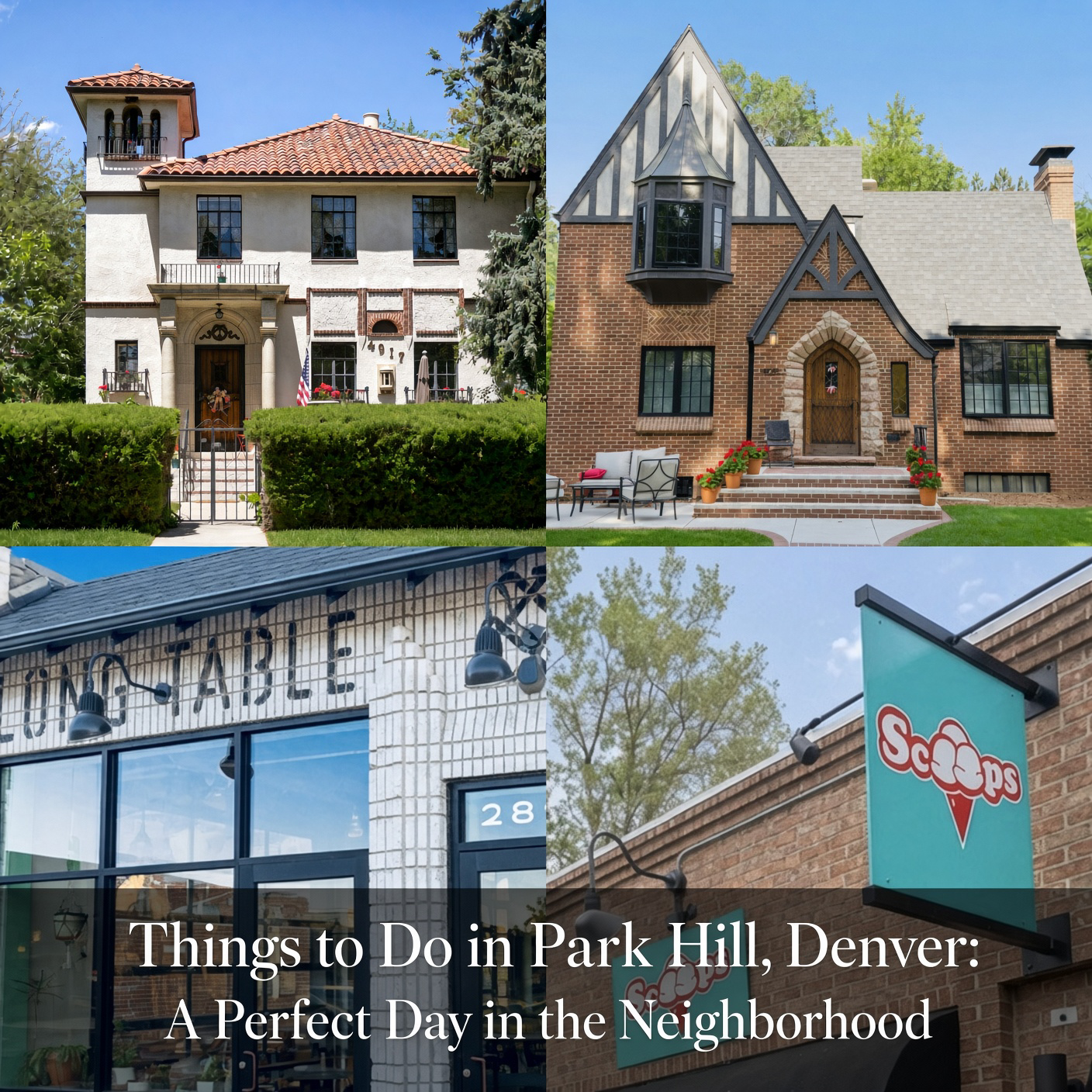
The best way to appreciate Park Hill's architecture is to walk several residential blocks rather than relying on a single historic street. Older homes here reflect different building periods and styles, including brick bungalows, Craftsman-influenced houses, Tudor Revival details and larger period homes.


One of the most revealing details is the relationship between an older home's original footprint and its current layout. A thoughtfully expanded house may preserve its historic street presence while adding a modern kitchen or a main-floor primary suite. Another may retain more original character but require substantial work to meet contemporary expectations.
Having renovated older Denver homes, David Krohne understands why these distinctions matter. Cosmetic updates and structural improvements are not the same thing. Fresh paint and new lighting may improve first impressions, while electrical systems, foundations, drainage, roofing and the quality of previous additions can have far greater implications for ownership costs.
For a prospective buyer, the lesson is simple: appreciate the architecture, but evaluate the house behind it. An attractive historic exterior does not establish the condition of its underlying systems.
3. Spend Time in the Parks and Green Spaces
A neighborhood walk should include time outdoors, not just a route between businesses. Park Hill's mature residential canopy and nearby public green spaces are part of the appeal, particularly for people who want access to outdoor recreation without leaving the city.

City Park
Head toward City Park for open lawns, lakes, walking paths and views of the Denver skyline and mountains. It is a good option if you want to extend your neighborhood day into a longer outdoor outing.
Explore the former Park Hill Golf Course site, now public open space, and follow updates on the long-term park framework and planned recreational improvements.
Give yourself 30 to 60 minutes, depending on your plans. City Park is the stronger choice for a traditional park outing with established amenities, while Park Hill Park offers an opportunity to understand an evolving open-space resource. Check access details and current facilities before visiting, as plans for the latter continue to develop.
For homebuyers, green space deserves a more precise evaluation than simply checking whether a park is nearby. Walk the actual route from a property, notice major street crossings, and consider whether you would realistically make the trip on an ordinary weekday. Five minutes away on a map can feel different from five minutes on foot.
4. Explore Park Hill's Local Dining and Shopping
For lunch, make time for one of Park Hill's neighborhood business clusters. The Fairfax Street area around Park Hill Commons is particularly convenient because coffee, bakeries, casual food and sit-down dining are gathered along the same stretch.


Lucina Eatery & Bar: A sit-down option for Latin American, Caribbean and coastal Spanish-inspired cooking.
Sexy Pizza: A casual stop for pizza.
Oneida Park: Another neighborhood gathering place, with a block of local businesses and an outdoor courtyard.
Allow 60 to 90 minutes for lunch and a little browsing. Check individual business hours and menus before setting out.
The broader point is to experience the neighborhood's commercial areas as residents would use them. Are the places you would frequent concentrated in one walkable cluster, or would your usual errands require a car? The answer depends partly on which section of Park Hill you choose.
That is a useful distinction for buyers comparing homes. Two properties may both carry a Park Hill address but offer different walking routes, access to shops, and relationships to major roads. The neighborhood name alone does not tell you what everyday life will look like from a particular front door.
5. Learn About Park Hill's History and Community Identity
Park Hill's identity is shaped by more than its housing stock. Its history includes a significant struggle over racial integration, community activism and the question of who gets to belong in a neighborhood. Understanding that history adds context to the community you see today.
The neighborhood's civic history includes the work of Park Hill resident Rachel Noel, whose 1968 resolution helped lead to court-ordered integration of Denver's public schools. The area's community organizations continue to support neighborhood events and civic engagement.
Spend 20 to 30 minutes learning about local history, checking community event listings, or exploring neighborhood resources. The Greater Park Hill Community is a useful starting point for local news, events and neighborhood initiatives.
If you are visiting with children, a relaxed afternoon walk followed by a stop for ice cream or a playground break can be just as revealing as a formal attraction. If you are exploring Park Hill as a potential place to live, look for opportunities to attend a community event rather than judging the neighborhood solely on a real estate tour.
A house is a private asset, but the surrounding community shapes the experience of owning it. The people, places and routines you connect with may ultimately matter as much as the architectural features that initially attract you.
6. Finish the Day With a Drink, Dinner or a Slow Neighborhood Walk
The best way to finish a day in Park Hill is to return to a local business or take another walk through the streets you enjoyed most. That second look often reveals details missed during the morning, when you were still getting your bearings.

If you prefer a quieter finish, take a 20-minute walk through the residential blocks around the home styles you found most appealing. Notice street lighting, traffic, parking, sidewalk conditions and how houses relate to their neighbors.
These are not trivial details when choosing a home. A busy road, a particularly appealing block, a nearby commercial area or a property's orientation can influence daily enjoyment and the appeal of a home to future buyers.
7. What a Day in Park Hill Can Teach You About Buying a Home Here
A day exploring Park Hill is also a practical exercise in evaluating real estate. Rather than asking only whether you like the neighborhood, consider three separate questions: Does the lifestyle fit? Does the specific location work? Does the property make financial sense?
Lifestyle fit
Walk to the places you expect to use regularly. Test your likely routes to coffee, parks, groceries, schools or transit rather than assuming every part of Park Hill offers the same convenience.
Property fit
Compare the home's architectural character, layout, lot, condition and renovation potential. In older houses, investigate major systems and previous additions before treating cosmetic appeal as a proxy for quality.
Financial fit
Compare recent sales of genuinely similar homes, accounting for location, condition, size, lot and renovation quality. A beautifully renovated property is not automatically a good value if its price exceeds what comparable buyers are likely to support.
This distinction is especially important in Park Hill, where the housing stock varies considerably from block to block. Two homes with similar square footage can differ meaningfully in original character, maintenance needs, usable outdoor space and the cost of bringing an older layout up to modern standards.
David Krohne, a Park Hill resident and Denver Realtor with the FORM Team at Compass Denver, approaches older-home decisions through the combined lenses of architecture, renovation and financial value. His own experience restoring Denver homes informs a practical principle: distinguish what you love about a property from what it will take to own, maintain and improve it.
You do not need to resolve every buying question during one visit. Instead, use the day to identify the streets, businesses and types of homes you want to investigate more closely. Then use property-level research and comparable sales to determine whether a particular house makes sense.
If you're thinking about buying, selling or renovating in Denver, Let's connect professionally and continue the conversation.
If Park Hill is on your shortlist, a neighborhood-focused home search can help you compare its different sections, understand the tradeoffs between historic character and modern updates, and identify properties that fit both your lifestyle and financial priorities.
Key Takeaways
Start with the neighborhood's daily routines. Spend 30 to 45 minutes at a local café, then walk the surrounding streets to get a better feel for Park Hill's everyday atmosphere.
Explore architecture beyond the façades. Park Hill includes different generations of Denver housing. Compare original features, additions, lot characteristics and maintenance needs when evaluating older homes.
Visit more than one green space. City Park offers established recreational amenities, while Park Hill Park provides access to an evolving 155-acre public open-space resource. Check current facilities and access before visiting.
Compare the neighborhood's commercial clusters. Fairfax Street and Oneida Park offer different places to eat, meet friends and spend time locally. Your proximity to these amenities will depend on the specific property.
Treat Park Hill as a collection of micro-markets. A shared neighborhood name does not mean identical walkability, housing condition, architectural character or resale potential.
Evaluate lifestyle and financial value separately. The right home should suit your daily routines and make sense when you account for comparable sales, renovation requirements and long-term ownership costs.
Frequently Asked Questions
1. What are the best things to do in Park Hill, Denver?
Start with a local coffee shop, walk the residential streets to admire historic homes, visit City Park or Park Hill Park, and have lunch at a neighborhood business. Fairfax Street and Oneida Park are useful stops for food and local shopping.
2. Is Park Hill, Denver, walkable?
Walkability varies by location. Some homes are within easy walking distance of cafés and restaurants, while others require a longer walk or a car for everyday errands. Test the actual route from a property to the places you expect to visit regularly.
3. What is Park Hill known for?
Park Hill is known for its mature residential streets, historic architecture, varied housing stock, green spaces and community identity. Its history also includes significant civic activism around racial integration and public education.
4. Where should I eat in Park Hill, Denver?
Consider Honey Hill Cafe for coffee and casual food, Lucina Eatery & Bar for a sit-down meal, or Sexy Pizza for a more casual option. Park Hill Commons on Fairfax Street is a convenient place to explore several businesses in one outing. Check current hours before visiting.
5. Is Park Hill a good neighborhood for families?
Park Hill may appeal to households seeking older homes, residential streets, parks and neighborhood businesses. The right fit depends on the specific location, school and childcare needs, commute, budget and preferred housing style. Evaluate individual properties and verify current school assignments independently.
6. What types of homes can you find in Park Hill?
Park Hill includes brick bungalows, Craftsman-influenced houses, Tudor Revival homes, larger historic properties, renovated houses and newer construction. Condition and layout vary substantially, so buyers should evaluate original features, major systems, additions and renovation quality rather than relying on architectural style alone.
7. What should I know before buying a home in Park Hill?
Compare recent sales of similar properties and investigate the home's structural condition, major systems, renovation history and location. Two homes of similar size can have very different ownership costs and resale prospects depending on their condition, lot, block and quality of improvements.
Check out this article next