



Summary
Park Hill and West Highland are both highly desirable Denver neighborhoods with historic housing, mature trees and strong neighborhood identity, but they appeal to different buyers. Park Hill offers greater architectural and geographic variety, larger residential streetscapes and a deeper mix of housing eras. West Highland feels more compact and urban, particularly around 32nd Avenue. The better choice depends on whether you prioritize residential character, architecture, walkability, renovation potential or proximity to neighborhood activity.
Introduction
At first glance, Park Hill and West Highland can seem like variations on the same Denver theme.
Both have older houses. Both have mature trees and established residential streets. Both attract buyers who want something with more character than a typical newer subdivision. And both offer homes where architecture, renovation quality and the surrounding block can matter just as much as the number of bedrooms or the size of the kitchen.
But having spent years buying, renovating and selling older Denver homes, I think that surface-level comparison misses what makes these neighborhoods interesting.
They represent two different versions of what an established Denver neighborhood can be.
Park Hill is expansive and layered. Its identity changes noticeably from one section to another, and its housing stock reflects many different periods of Denver's development. West Highland feels tighter and more urban, with the 32nd Avenue corridor playing a much more prominent role in the neighborhood experience.
For a buyer, that distinction matters because the question is not simply, "Which neighborhood is better?"
It is, "Which version of Denver fits the way I actually want to live?"
Park Hill is a neighborhood you have to learn block by block
One of the things I find most interesting about Park Hill is that describing it as a single neighborhood can be misleading.
There is a meaningful difference between different parts of Park Hill in terms of housing stock, architecture, streetscape and the types of renovations you encounter. You can move through the neighborhood and see classic Denver bungalows, brick Tudors, early twentieth-century homes, mid-century properties, substantial additions and newer construction.
That variety is part of Park Hill's appeal.
It also means that neighborhood-level statistics can sometimes tell you less than you might expect.
If I am helping a buyer evaluate a Park Hill house, I am interested in the specific block and the specific collection of competing homes. What has been renovated nearby? How large are the lots? What architectural styles dominate the block? Are buyers likely to view the property as turnkey, a renovation opportunity or something in between?
Those details influence both lifestyle and value.
Park Hill also tends to offer a stronger sense of traditional residential Denver in many areas. Mature trees, setbacks and the relationship between houses and streets can create a feeling of space that is difficult to replicate in newer neighborhoods.
For someone relocating to Denver from another city, that can be an important part of the appeal. You are not simply purchasing a house. You are buying into a physical environment that has developed over generations.
West Highland feels more compact and connected
West Highland has a different rhythm.
Its older homes provide plenty of architectural character, but the neighborhood's relationship with surrounding commercial areas is a much more visible part of the experience.
The 32nd Avenue corridor is particularly important. For buyers who value being able to leave their house and quickly reach restaurants, shops and other neighborhood amenities, that proximity can be a significant advantage.
This creates an interesting distinction between the two neighborhoods.
A buyer who says, "I want a beautiful old Denver house, but I also want to feel connected to restaurants and neighborhood activity," may find West Highland especially compelling.
Another buyer might say, "I want an older home, but I want my immediate surroundings to feel predominantly residential and established."
That buyer may gravitate toward Park Hill.
Neither preference is more sophisticated or more correct. They simply represent different priorities.
And this is one reason I think neighborhood comparisons based entirely on rankings are often unhelpful. Real estate is personal. The right neighborhood is the one whose compromises you actually like.
The biggest mistake is comparing the houses instead of the blocks
This is particularly important with Denver's older housing stock.
Put a renovated Park Hill bungalow and a renovated West Highland bungalow next to each other on a real estate website and they may look remarkably similar.
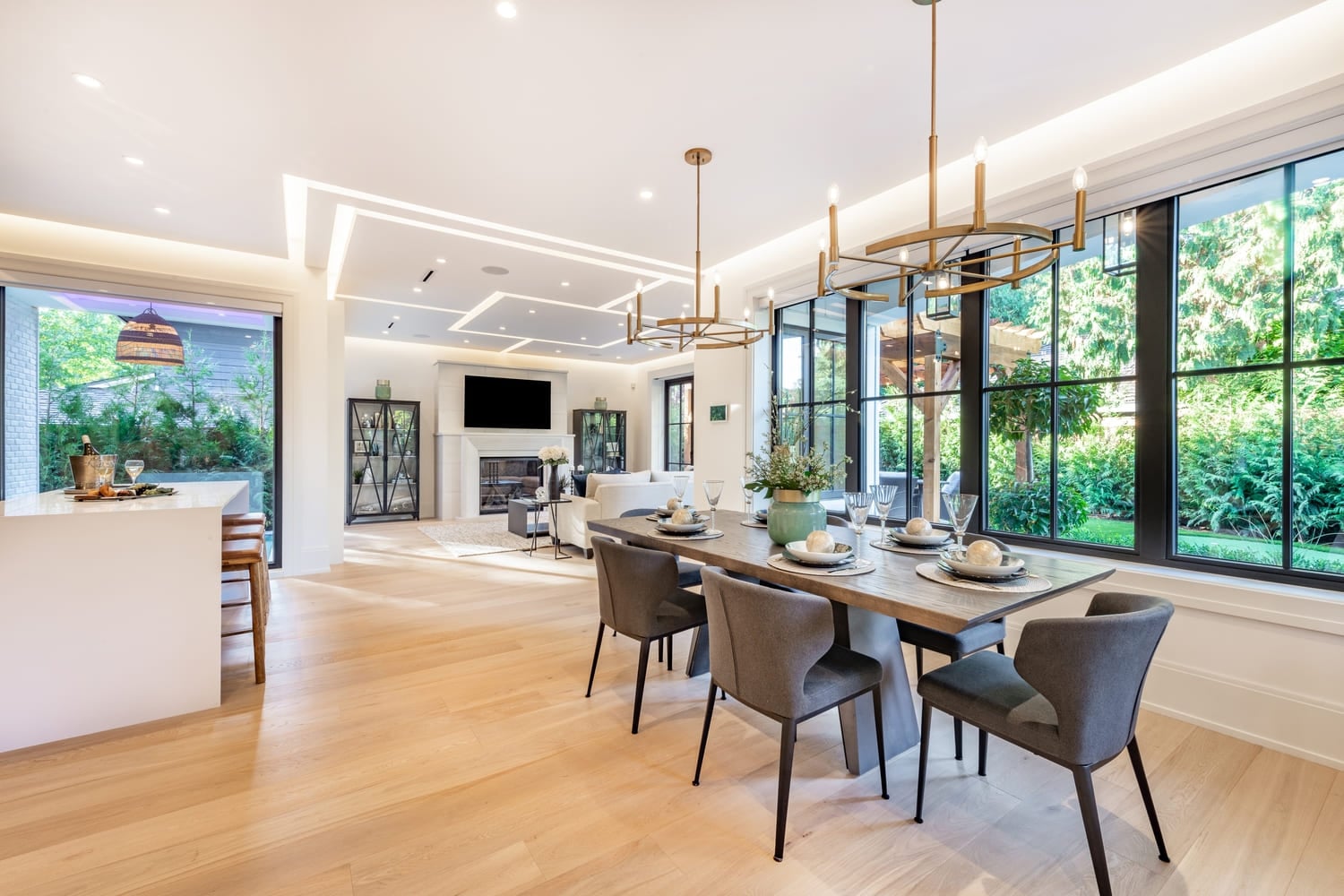
Both might have white oak floors, a renovated kitchen, modern lighting, an open living area and beautifully landscaped yards.
But those finishes don't tell you everything.
When I walk through an older Denver house with a buyer, I pay attention to the things that are harder to photograph.
How does the house sit on the lot?
Does the addition make architectural sense?
Has the renovation improved the floor plan or simply added expensive finishes?
What remains original?
How does the house compare with the surrounding properties?
And what will the next buyer see when the house eventually comes back onto the market?
That last question is particularly important.
A home is not competing against an abstract neighborhood average. It is competing against the best alternatives available to a buyer at that particular price.
Park Hill can be especially interesting for renovation-minded buyers
This is where my personal experience renovating older Denver homes has shaped the way I evaluate properties.
Older houses create opportunities that newer construction often does not. You can work with existing architectural character, improve functionality and sometimes create a home that feels genuinely specific to its location.
But renovation requires restraint as well as creativity.
One of the lessons I have learned is that square footage is not automatically the answer to every problem.
Adding meaningful space can absolutely transform an older house. A well-designed main-floor primary suite or an expanded kitchen that creates a better connection to family living space can change how a buyer experiences the entire property.
But an addition that simply makes the house bigger is not necessarily a better investment.
The question is whether the improvement makes the house meaningfully better and whether the resulting value makes sense relative to the surrounding homes.
That is particularly important in neighborhoods like Park Hill, where the housing stock varies so much from property to property.
West Highland rewards buyers who value location and neighborhood activity
The renovation equation exists in West Highland as well, but the lifestyle equation can be different.
For some buyers, the proximity to 32nd Avenue and the broader northwest Denver commercial network is a major part of the appeal.
That convenience can influence how someone uses their home every day.
A house that is a short walk from the places you regularly visit can feel very different from an equally attractive house that requires a car for most errands.
But proximity is also a tradeoff.
Buyers should consider the amount of street activity, parking and noise that comes with being closer to commercial corridors. Some people see those things as part of urban neighborhood life. Others would rather have more separation.
This is why I encourage buyers to visit a property at different times of day and not make their decision entirely from a Saturday afternoon showing.
The house is only part of the purchase.
Which neighborhood offers better real estate value?
This is where I would be cautious about giving a simple answer.
Park Hill is not automatically a better investment because it has certain architectural characteristics. West Highland is not automatically a better value because of its proximity to commercial amenities.
Value comes from the relationship between price, property quality, location, future demand and the alternatives available to buyers.
For an older Denver home, I would think about it through five questions:
1. Is the house fundamentally good?
Look at layout, natural light, lot, architecture, condition and how the house functions before getting distracted by countertops and paint colors.
2. Is the renovation appropriate?
The best renovation usually feels as though it belongs to the house rather than being imposed on it.
3. What is happening on the surrounding blocks?
Nearby renovations, new construction and the quality of competing properties can provide important clues about how buyers perceive the area.
4. Are you paying for someone else's renovation premium?
A beautifully renovated house can be worth the premium, but you should understand exactly what you are paying for.
5. What will make this property desirable five or ten years from now?
That is where real estate strategy becomes more interesting than simply comparing today's listings.
So, should you buy in Park Hill or West Highland?
If your priority is architectural variety, mature residential streets, larger-feeling blocks and the experience of living among Denver's older housing stock, Park Hill deserves a close look.
If your priority is a more compact neighborhood experience, strong access to commercial activity and the ability to combine an older home with a more urban lifestyle, West Highland may be the better fit.
But I would not stop there.
I would compare specific properties rather than neighborhoods in the abstract.
A particularly good house on the right Park Hill block may be a much better purchase for one buyer than a similarly priced West Highland property. For another buyer, the opposite may be true.
That is why local knowledge matters most at the micro-market level.
Having spent considerable time working with and renovating older Denver homes, I have found that the most interesting real estate decisions rarely come down to a simple "best neighborhood" ranking. They come down to understanding the relationship between the house, the block, the neighborhood and the buyer's long-term objectives.
Park Hill and West Highland are both excellent examples of that principle.
They are not two versions of the same neighborhood.
They are two different interpretations of what makes living in Denver's established neighborhoods special.
For buyers trying to decide between them, the most productive next step is to stop asking which neighborhood wins and start identifying which compromises you prefer. That is usually where the right answer becomes much clearer.
Key Takeaways
- Park Hill and West Highland offer different versions of established Denver living. Park Hill generally provides more geographic and architectural variety, while West Highland has a more compact, urban feel.
- The individual block can matter more than the neighborhood name. Architecture, lot characteristics, surrounding homes, street activity and renovation quality can materially change the value and experience of a property.
- Park Hill is particularly nuanced for older-home buyers. Different sections of the neighborhood have different housing stock, streetscapes and renovation patterns.
- West Highland is especially attractive to buyers who value neighborhood activity and proximity to commercial amenities, particularly around 32nd Avenue.
- For older homes, evaluate the underlying property rather than the finishes alone. Layout, architecture, additions, lot, condition and renovation quality often matter more than a newly remodeled kitchen.
- Neither neighborhood is universally the better investment. The strongest purchase is usually the property where price, location, architecture, condition and future buyer appeal are appropriately aligned.
FAQ
Is Park Hill or West Highland better for families?
Both can work well for households looking for established Denver neighborhoods, but the better choice depends on the specific block and lifestyle. Park Hill may appeal more to buyers seeking a quieter residential environment and architectural variety, while parts of West Highland may appeal to those prioritizing proximity to shops, restaurants and neighborhood activity.
Which has better older homes, Park Hill or West Highland?
There is no universal winner. Park Hill has an especially broad range of historic and older housing styles, while West Highland also contains substantial historic housing and distinctive early Denver architecture. The quality of an individual property matters more than simply choosing one neighborhood.
Is Park Hill more expensive than West Highland?
Not necessarily on every property. Prices vary based on location, architecture, condition, renovation quality, lot and other property-specific factors. Comparing similar homes in comparable locations provides a more useful picture than relying on a neighborhood-wide price assumption.
Is West Highland more walkable than Park Hill?
West Highland can offer a particularly strong walkable lifestyle around commercial areas such as 32nd Avenue. Park Hill has walkable residential areas as well, but the experience varies considerably depending on which part of the neighborhood you choose.
Is Park Hill a good place to buy a fixer-upper?
It can be, particularly for buyers who appreciate older architecture and are willing to approach renovation thoughtfully. The key is understanding what can realistically be improved, what should be preserved and where the finished property will sit relative to competing homes.
What should I look for when buying an older home in Denver?
Look beyond cosmetic finishes. Evaluate the home's architecture, floor plan, foundation and major systems, previous additions, lot, surrounding properties and renovation quality. For a potential fixer, also consider whether the proposed improvements make financial sense relative to the neighborhood.
Should I choose Park Hill or West Highland based on resale value?
Resale should be one consideration, not the only one. A property with strong architecture, good location, thoughtful improvements and broad buyer appeal can be a compelling long-term purchase in either neighborhood. The specific property and price matter enormously.
Check out this article next
