



Summary
After buying, renovating, designing and selling homes in Denver, I have learned that the best real estate decisions usually start with the house itself. A good layout, thoughtful architecture, durable design and disciplined spending matter more than following trends. In Denver's older neighborhoods, the goal is often not to make a house look new, but to reveal what is already valuable, improve what is not, and create a home that works beautifully today while retaining broad appeal tomorrow.
Buying, renovating and selling an older home teaches you things that are difficult to learn from a spreadsheet.
You learn that a floor plan can be worth more than a new kitchen. You learn that moving a wall can completely change how a house feels, but that moving the wrong wall can create a problem you spend years trying to solve. You learn that the difference between a thoughtful renovation and an expensive one is often not the quality of the materials, but the quality of the decisions.
I have renovated older homes in Denver's historic neighborhoods, and my experience in finance has probably made me more conscious than most people of the relationship between what you spend and what you get back. I also spend a great deal of time walking through homes with buyers and sellers, which provides another perspective: understanding what people actually respond to when they walk through a house.
These are the twelve lessons I keep coming back to.
1. A great layout can make a fixer-upper a great opportunity
When I walk into a dated Denver home, one of the first things I look at is not the kitchen or the countertops. I look at the floor plan.
Layout changes are expensive. They can involve structural engineering, plumbing, electrical work, permitting and substantial reconstruction. A house that needs cosmetic updating but already has a logical flow can therefore be much more attractive than a beautifully finished house with a fundamentally awkward plan.
In neighborhoods such as Park Hill, where many homes were built with distinctive original floor plans, I pay particular attention to what can be improved without fighting the architecture.
A run-down house with a great layout can be a much better opportunity than a remodeled house with a bad one.
2. Almost every wall can move, but that does not mean every wall should
One of the most liberating things to understand when renovating an older home is that the existing floor plan is not necessarily sacred.
With the right architect, structural engineer and contractor, surprisingly significant changes can be made. Walls can move. Openings can be created. Rooms can be combined. Circulation can be improved.
But there is an important distinction between can and should.
I have seen renovations where someone opened everything up simply because they could. The result was a house with fewer defined spaces and less character. Good renovation is not demolition for its own sake. It is solving problems deliberately.
3. A great architect is worth the money
This is particularly true when adding square footage.
Too many additions look exactly like what they are: an addition stuck onto an existing house.
The challenge is not simply creating another bedroom or expanding a kitchen. It is making the new space feel as though it belongs to the original architecture.
A good architect thinks about proportions, rooflines, window placement, sightlines, circulation and how people move through the house. They can also help solve the less obvious problems, such as where a staircase belongs without sacrificing an important living space.
In Denver's older neighborhoods, that sensitivity matters enormously.
The best additions are often the ones you barely notice.
4. Let the house tell you what it wants to be
One of the biggest renovation mistakes is starting with Pinterest instead of the house.
If every renovation uses the same white oak floors, white walls, black fixtures, slab backsplashes and interchangeable lighting, homes begin to lose their identity. Trends eventually become dated precisely because everyone follows them.
I would rather start with the architecture.
A 1920s Denver bungalow should not necessarily be renovated in the same way as a 1940s Park Hill ranch or a Victorian-era home in Capitol Hill.
That does not mean preserving everything exactly as it was. It means understanding the original character and using it as the foundation for modern decisions.
Authenticity tends to age better than imitation.
5. Design for yourself, but remember that you probably will not live there forever
The average homeowner does not necessarily think about resale value when choosing a kitchen backsplash or moving a wall. That is understandable. Your home should work for your life.
But it is worth remembering that most homeowners eventually move.
That means today's renovation decisions can become tomorrow's resale decisions.
There is nothing wrong with making a home personal. The problem is making it so specific that the next buyer has to undo your decisions.
For example, creating a beautiful staircase in the wrong location might technically add square footage while simultaneously shrinking the living room, eliminating a natural dining area and creating awkward furniture placement.
More space is not always better space.
6. Square footage is only valuable when it improves the house
This is one of the most important lessons I have learned from both renovating and selling homes.
A 300-square-foot addition sounds valuable on paper. But if those 300 square feet create an awkward hallway, an oversized bedroom or a poorly connected room, the economic return can be disappointing.
The best additions solve a meaningful problem.
A main-floor primary suite can dramatically improve the functionality of the right older home. Expanding a cramped kitchen to create genuine family-room space can change how a family uses the entire house.
The question should not be, "How much square footage can I add?"
It should be, "What problem am I solving?"
7. There is a ceiling to what a neighborhood will pay
This is where renovation and real estate strategy intersect.
You can build an incredible house, but that does not automatically mean the market will reward every dollar you spend.
Neighborhoods have price ranges. Buyers compare properties. Appraisers look at comparable sales. And even within a neighborhood such as Park Hill, different blocks, lot characteristics, architecture, condition and proximity to amenities can influence value.
Before undertaking a major renovation, I want to understand where the finished property will sit relative to its competition.
The goal is not to create the most expensive house you possibly can.
It is to create the right house for the market.
8. Don't cheap out on lighting
Lighting is one of the most overlooked opportunities in residential design.
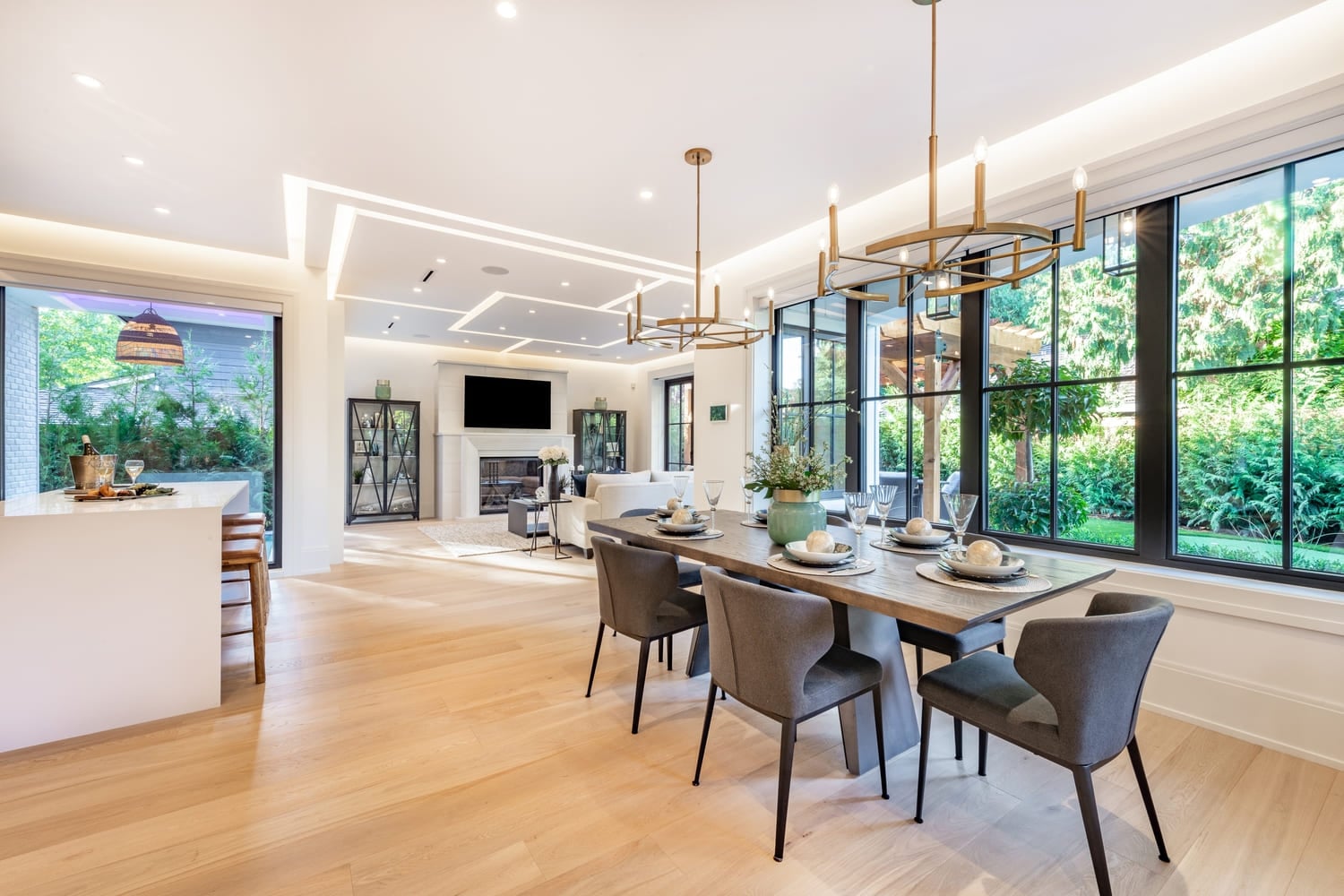
I increasingly think of light fixtures as the jewelry of a home. A beautiful entry chandelier, a distinctive dining fixture or an unexpected pair of sconces can create a memorable moment without requiring a massive construction budget.
This is particularly effective in spaces such as powder rooms, where a small room can support a more adventurous design choice.
You do not need an expensive fixture everywhere. But treating lighting as an afterthought is a mistake.
9. The best renovations are usually a little bolder than the safest renovations
There is a difference between being tasteful and being forgettable.
A home does not need to be covered in unusual colors or dramatic wallpaper to have personality. But if every decision is made to appeal to absolutely everyone, the result can feel like a spec home.
I have found that a few carefully considered moments can make a house feel much more distinctive.
The key is restraint. One memorable powder room is more effective than twelve competing statements.
10. Buyers buy the feeling before they analyze the spreadsheet
Having spent years looking at homes with buyers, I have seen how quickly people form an opinion.
They notice natural light. They notice how the entry feels. They notice whether rooms connect naturally. They notice whether a house feels cared for.
Then they start analyzing bedrooms, bathrooms, square footage and comparable sales.
That does not mean the numbers are unimportant. Quite the opposite. But presentation and emotional response influence how buyers interpret those numbers.
A well-designed home can make buyers more willing to compete for it.
11. Renovation decisions should be made with both cost and value in mind
My finance background has made me naturally skeptical of the idea that spending more automatically creates more value.
Sometimes it does.
Sometimes spending $20,000 in the right place creates substantially more perceived value than spending $50,000 somewhere else.
The important question is not simply whether something is expensive. It is whether it changes the way people experience the house.
That is why I think about renovations in terms of return, risk and opportunity cost, not just construction cost.
12. The best real estate decisions start before you buy
Perhaps the biggest lesson is that renovation strategy should influence the purchase decision.
When evaluating an older Denver home, I am thinking about more than whether I like the house today.
I am thinking about:
- What is difficult to change?
- What is relatively easy to change?
- What architectural character should be preserved?
- Where could square footage be added?
- What will the finished house compete against?
- What will buyers value?
- Is there a clear path from today's house to tomorrow's house?
That is one reason I believe renovation knowledge is so useful when buying and selling older Denver homes.
The value is not simply knowing what a house looks like today. It is being able to see what it could become, and understanding whether the economics of getting there make sense.
What I would do differently today
If I were evaluating a Denver fixer-upper tomorrow, I would resist the temptation to immediately start picking tile and paint colors.
I would first understand the architecture, study the floor plan, identify the expensive problems, determine which walls matter, talk to an architect if structural changes are contemplated, and look carefully at the homes the finished property will eventually compete with.
Only then would I start designing.
That approach is particularly important in Denver's older neighborhoods. Homes in Park Hill, Congress Park, City Park West, Washington Park, Capitol Hill and other historic areas have character that cannot simply be recreated with new materials.
The smartest renovation is often the one that makes the house feel more like itself, not less.
And when the time eventually comes to sell, that authenticity can matter.
The real lesson: improve the house, not just the finishes
Buying, renovating and selling homes has changed the way I look at real estate.
I no longer see a dated house simply as a house that needs updating. I see a collection of opportunities and constraints.
The floor plan may be the opportunity. The architecture may be the asset. The addition may be the risk. The lighting may be the finishing touch. And the neighborhood may ultimately determine how much of the investment the market is willing to recognize.
That perspective is useful whether you are buying a fixer-upper, considering a major renovation or simply trying to decide whether a project makes financial sense.
For me, the best Denver homes are rarely the ones where someone spent the most money. They are the ones where someone made the best decisions.
Key Takeaways
- Start with the floor plan, not the finishes. A dated home with a strong layout can be a better investment than a remodeled home with fundamental flow problems.
- Add square footage only when it solves a real problem. More space does not automatically mean more value.
- Use a good architect for meaningful structural changes. The goal of an addition should be integration, not simply attachment.
- Let Denver's older homes guide the design. Preserving and complementing architectural character generally creates a more timeless result than copying the latest remodeling trend.
- Think about resale before construction begins. A renovation should satisfy your needs without creating strange spaces or narrowing the future buyer pool.
- Understand the neighborhood's price ceiling. The finished home needs to make sense relative to the properties buyers will compare it against, whether in Park Hill or elsewhere in Denver.
FAQ
Is buying a fixer-upper in Denver a good investment?
It can be, particularly when the home has strong underlying characteristics such as a good lot, desirable architecture or a functional floor plan. The key is determining whether the cost of improvements is justified by the property's likely finished value.
What should I look for when buying an older Denver home?
Look beyond cosmetic condition. Pay attention to the floor plan, structural issues, natural light, ceiling heights, lot characteristics, architectural details and the potential for improvements. A dated kitchen is usually easier to solve than a fundamentally poor layout.
Should I add square footage to my Park Hill home?
Only if the additional space meaningfully improves the home's functionality and the resulting property makes sense relative to nearby homes. A well-designed addition can be valuable, but adding space simply to increase square footage can produce disappointing returns.
Is it worth hiring an architect for a home renovation?
For renovations involving major layout changes, additions or significant structural work, I believe a good architect can be extremely valuable. The best architects help solve problems that are difficult to identify from a simple floor plan and can make new construction feel integrated with the original house.
Should I follow current interior design trends when renovating?
Use trends selectively. A timeless renovation usually starts with the home's architecture and incorporates contemporary elements without allowing the entire design to depend on a short-lived trend.
What renovation projects add the most value to a Denver home?
There is no universal answer. Improvements that solve functional problems, improve flow, enhance natural light or create highly desirable living spaces can be valuable. The right project depends on the house, neighborhood and competing properties.
How can a Realtor help with a renovation?
A Realtor who understands construction and older homes can provide a market perspective that an architect or contractor may not. They can help evaluate competing properties, likely buyer preferences and the potential resale implications of major renovation decisions.
Call to Action
If you are considering buying, renovating or selling an older Denver home, the most useful conversation often happens before the work begins.
David Krohne is a Denver Realtor with the FORM Team at Compass Denver and has firsthand experience renovating homes in Denver's historic neighborhoods. If you are evaluating a fixer-upper, planning a major renovation or simply trying to understand what improvements make sense before selling, David can help you think through the property from both a renovation and real estate perspective.
He also maintains a network of local professionals, including architects, contractors, designers and other home service providers, who can be valuable when a project moves from an idea to a plan.
Check out this article next
