



Summary
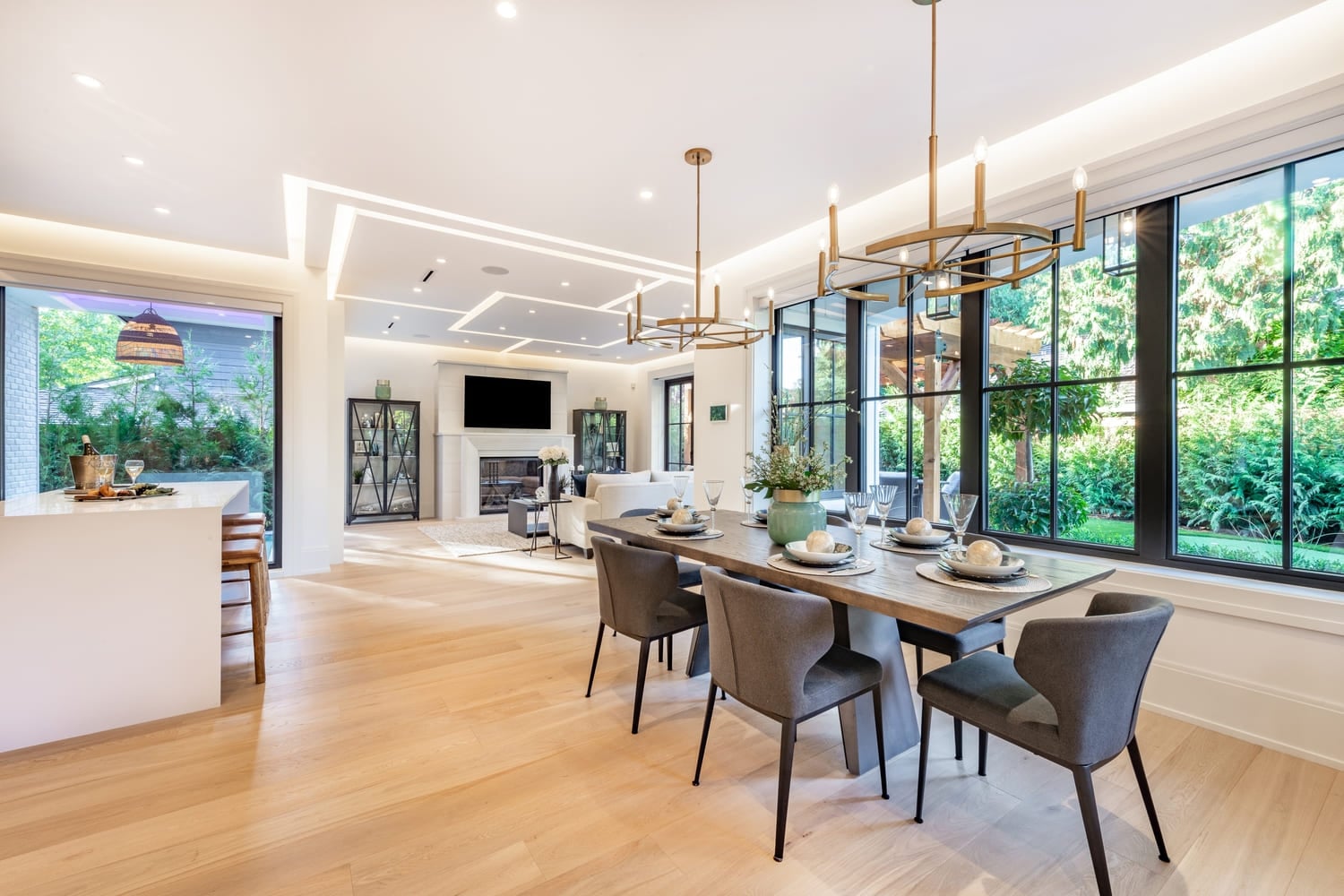
A $1 million home in Denver generally buys substantially more physical space than the same budget in San Francisco, Los Angeles, Manhattan, Boston, or Seattle. At current median prices per square foot, $1 million equates to roughly 2,800 square feet in Denver versus about 920 in San Francisco and 1,600 in Los Angeles. But Denver's real advantage is not simply size. In neighborhoods such as Park Hill, buyers can often combine location, architectural character, usable land, and renovation potential in ways that are difficult to replicate in higher-cost cities.
Denver's $1 million price point is interesting because it sits at the intersection of several different housing markets. It is far above the city's overall median, yet it is not necessarily considered ultra-luxury in some of Denver's most desirable neighborhoods.
That distinction matters.
According to Redfin, the median Denver home sold for approximately $643,000 over the three months ending July 2026, with a median sale price of $357 per square foot. A simple calculation puts $1 million at roughly 2,800 square feet at the citywide median price per square foot.
But real estate does not work like buying lumber by the square foot.
The neighborhood, lot, architecture, renovation quality, garage, outdoor space, street, and even the block can move the value dramatically. That is particularly important in Denver's older neighborhoods, where two houses with similar square footage can have very different market values.
What $1 Million Buys in Denver
At the citywide median of $357 per square foot, $1 million represents approximately 2,800 square feet of housing. That is a useful starting point, but it should not be interpreted as a prediction for an actual $1 million listing.
For context, Denver's $1 million budget is roughly 55% above the city's current median sale price of $643,000. That puts a buyer meaningfully above the middle of the market, although the experience varies substantially by neighborhood.
The difference becomes clearer when looking at established central Denver neighborhoods. In 80206, which includes areas around Cherry Creek and Congress Park, the median sale price was approximately $1.01 million through July 2026. In 80209, including Washington Park and nearby neighborhoods, the median was approximately $1.10 million.
That means $1 million in Denver can represent a relatively large house in one neighborhood and a near-entry point for a desirable property in another.
How Denver Compares With Other Major Cities
Using current median sale prices per square foot provides a useful apples-to-apples framework, although it does not account for differences in property type, lot size, architecture, taxes, or neighborhood.
| City | Recent median $/sq. ft. | Approx. space represented by $1M |
|---|---|---|
| Denver | $357 | ~2,800 sq. ft. |
| Chicago | $290 | ~3,450 sq. ft. |
| Seattle | $533 | ~1,880 sq. ft. |
| Boston | $695 | ~1,440 sq. ft. |
| New York City | $648 | ~1,540 sq. ft. |
| Los Angeles | $621 | ~1,610 sq. ft. |
| San Francisco | $1,090 | ~920 sq. ft. |
The figures are based on recent Redfin city-level market data and the $1 million estimates are simple calculations using those median prices per square foot.
The result is striking. At the median price per square foot, $1 million represents roughly three times as much physical space in Denver as in San Francisco.
Chicago is the notable counterexample. Its current median price is approximately $290 per square foot, making $1 million represent even more space than Denver.
But square footage is only one component of what buyers are purchasing.
Why Denver's $1 Million Homes Can Be More Interesting Than the Numbers Suggest
The most important Denver distinction is that buyers at $1 million are often choosing between space, location, and character, rather than simply choosing between bigger and smaller houses.
A buyer could spend $1 million on a relatively large newer home farther from central Denver, or spend approximately the same amount on an older home with a smaller footprint but a better location, stronger architecture, larger lot, and renovation potential.
This is where understanding Denver's housing stock becomes important.
In Park Hill, for example, the 80207 ZIP code had a median sale price of approximately $654,000 through July 2026, with a median of $370 per square foot. A $1 million budget therefore sits well above the ZIP code's overall median, creating opportunities that are not necessarily available at the same price point in Denver's more expensive central neighborhoods.
And the range within the ZIP code illustrates why averages can be misleading. Recent sales include a 1,770-square-foot home on Jasmine Street that sold for $950,000, while another 2,144-square-foot property sold for $750,000.
The lesson is simple: in older Denver neighborhoods, $1 million does not automatically buy the most square footage. It can buy a better combination of attributes.
Denver Versus Los Angeles and San Francisco
For buyers relocating from California, the difference can be particularly dramatic.
Los Angeles had a median sale price of approximately $1.1 million through July 2026, with a median of $621 per square foot. At that rate, $1 million represents about 1,610 square feet.
San Francisco is an even more extreme comparison. Its median sale price was approximately $1.7 million, while the median price per square foot was about $1,090. At that rate, $1 million represents less than 1,000 square feet.
Denver therefore offers a fundamentally different proposition at the same nominal price.
But I would caution relocating buyers against making the mistake of assuming that the Denver house should simply be bigger.
If you are coming from California, the smarter question is: What do I want my $1 million to accomplish?
If the answer is more bedrooms, a yard, a garage, a home office, and usable living space, Denver can offer a substantial improvement. If the answer is walkability, architectural character, and proximity to a specific urban environment, the calculation becomes more neighborhood-specific.
The Denver $1 Million Sweet Spot: Location Plus Potential
One of the most interesting opportunities around this price point is the older Denver home that is good enough to live in but has room to become exceptional.
Having renovated older Denver homes myself, I tend to look beyond the kitchen finishes when evaluating these properties. The expensive question is not whether the backsplash is dated. It is whether the underlying house gives you something worth improving.
A useful rule is to separate the property into three categories:
- Things you cannot easily change: location, street, lot orientation, mature trees, architectural bones.
- Things you can change at a significant cost: square footage, floor plan, mechanical systems, major windows, additions.
- Things you can change relatively easily: paint, lighting, flooring, fixtures, finishes.
At $1 million, I would rather see a buyer spend more of the budget on category one and two advantages than pay a premium for category three finishes.
That is especially relevant in Park Hill and other older Denver neighborhoods, where original architecture, lot characteristics, and renovation potential can create value that is difficult to reproduce in new construction.
Should You Buy Turnkey or Renovate at $1 Million?
There is no universal answer, but the decision becomes easier when you compare the total investment rather than the purchase price.
| Strategy | Primary advantage | Primary risk |
|---|---|---|
| Turnkey $1M home | Predictable first-year costs | Paying a premium for finishes |
| Older $900K home + renovation | Ability to customize | Construction overruns and delays |
| $1M character home | Location and architecture | May require selective updating |
| Newer $1M home | Lower immediate renovation burden | Potentially less distinctive location or architecture |
My finance background makes me particularly sensitive to the difference between price and total capital required.
A $900,000 house that needs $150,000 of work is not a $900,000 decision. It is a $1.05 million decision, before considering financing, carrying costs, and the value of your time.
Conversely, a $1 million older home that needs $30,000 of targeted work may ultimately be a better financial decision than a $1 million house that looks perfect but has a poor floor plan, compromised location, or limited ability to add value.
What $1 Million Really Means in Denver
The biggest mistake is treating "$1 million" as a property type.
It is not.
It is a budget that behaves differently depending on where you deploy it.
In Denver, $1 million can buy substantially more space than in several of America's most expensive housing markets, but the most compelling opportunities are often created by combining space with location, architecture, land, and renovation potential.
That is why I encourage buyers to stop asking, "How much house can I get for $1 million?"
The better question is:
"Where can $1 million buy me the combination of house, neighborhood, character, and future flexibility that I cannot easily create somewhere else?"
For buyers who value older homes, that question can lead to a very different search strategy. A well-located 1920s or 1930s Denver home with good bones may offer more long-term opportunity than a larger but less distinctive property.
And that is one reason Denver remains particularly interesting for buyers coming from higher-cost markets. The opportunity is not simply that the houses are bigger. It is that the $1 million price point still allows buyers to make meaningful choices about architecture, neighborhood, land, and future value.
If you're considering buying, selling, renovating, or relocating in Denver and want to follow more of my work, Let's connect.
If you're evaluating what a $1 million budget can realistically accomplish in Denver, I can help you compare neighborhoods, housing stock, renovation potential, and recent comparable sales so that you are evaluating the whole investment rather than simply the list price.
Key Takeaways
- $1 million buys substantially more space in Denver than in San Francisco or Los Angeles. At current median prices per square foot, it represents roughly 2,800 square feet in Denver, compared with about 920 in San Francisco and 1,610 in Los Angeles.
- Denver's $1 million market is highly neighborhood-dependent. The median sale price was approximately $1.01 million in 80206 and $1.10 million in 80209 through July 2026, compared with approximately $643,000 citywide.
- Park Hill illustrates why square footage alone is a poor valuation tool. 80207's median was approximately $654,000 and $370 per square foot, yet recent sales included a 1,770-square-foot home at $950,000 and a 2,144-square-foot home at $750,000.
- At $1 million, buyers should evaluate total capital required, not just purchase price. A $900,000 home requiring $150,000 of work is effectively a $1.05 million investment before carrying costs.
- The strongest opportunities can combine location, architecture, land, and renovation potential. Those attributes are difficult or impossible to manufacture after purchase, while finishes can generally be changed.
- Denver is not the cheapest major city. Chicago currently has a lower median price per square foot at approximately $290, but Denver still offers a materially different combination of central neighborhoods, detached housing, and older architectural stock.
FAQ
Is $1 million considered a lot of money for a house in Denver?
Yes, but it depends heavily on the neighborhood. Denver's citywide median sale price was approximately $643,000 through July 2026, while 80206 and 80209 were around $1.01 million and $1.10 million respectively.
How much square footage does $1 million buy in Denver?
Using Denver's current median sale price of approximately $357 per square foot, $1 million equates to roughly 2,800 square feet. Actual properties can vary dramatically based on location, condition, architecture, lot size, and renovation quality.
Is $1 million enough to buy a historic or older home in Denver?
Yes. In neighborhoods such as Park Hill, a $1 million budget is substantially above the current 80207 median sale price of approximately $654,000. However, highly renovated, architecturally significant, or unusually well-located properties can command substantial premiums.
Is Denver cheaper than Los Angeles for homebuyers?
Generally, yes when comparing space at the citywide median. Los Angeles was approximately $621 per square foot versus $357 in Denver through July 2026, meaning the same $1 million budget represents roughly 1,610 square feet in Los Angeles versus 2,800 in Denver.
Is San Francisco real estate more expensive than Denver?
Significantly. San Francisco's median sale price was approximately $1.7 million and its median sale price per square foot was about $1,090, compared with $643,000 and $357 per square foot in Denver.
Should I buy a turnkey $1 million home or renovate an older Denver home?
Compare the total investment, not the purchase price. A $900,000 home requiring $150,000 of renovation has a similar capital requirement to a $1.05 million turnkey property, so the better choice depends on location, architectural quality, floor plan, construction risk, and resale potential.
What should I prioritize when buying a $1 million home in Denver?
Prioritize attributes that are difficult to change: location, lot, street, architecture, floor plan potential, and structural condition. Finishes matter, but spending an additional $100,000 on cosmetic improvements is usually a very different investment decision from spending that money to solve a fundamental property limitation.
Check out this article next
